
Menu
Absolute Dental

Nutrition & Prevention · Nutrition and prevention

How Does What You Eat Affect Your Teeth?

What you eat affects your teeth mainly through sugar and acid. Each time sugar arrives, mouth bacteria make acid that softens enamel, and frequent snacking or sipping gives teeth little time to recover. At Absolute Dental, prevention means looking at your usual day and finding a few changes you’ll keep.

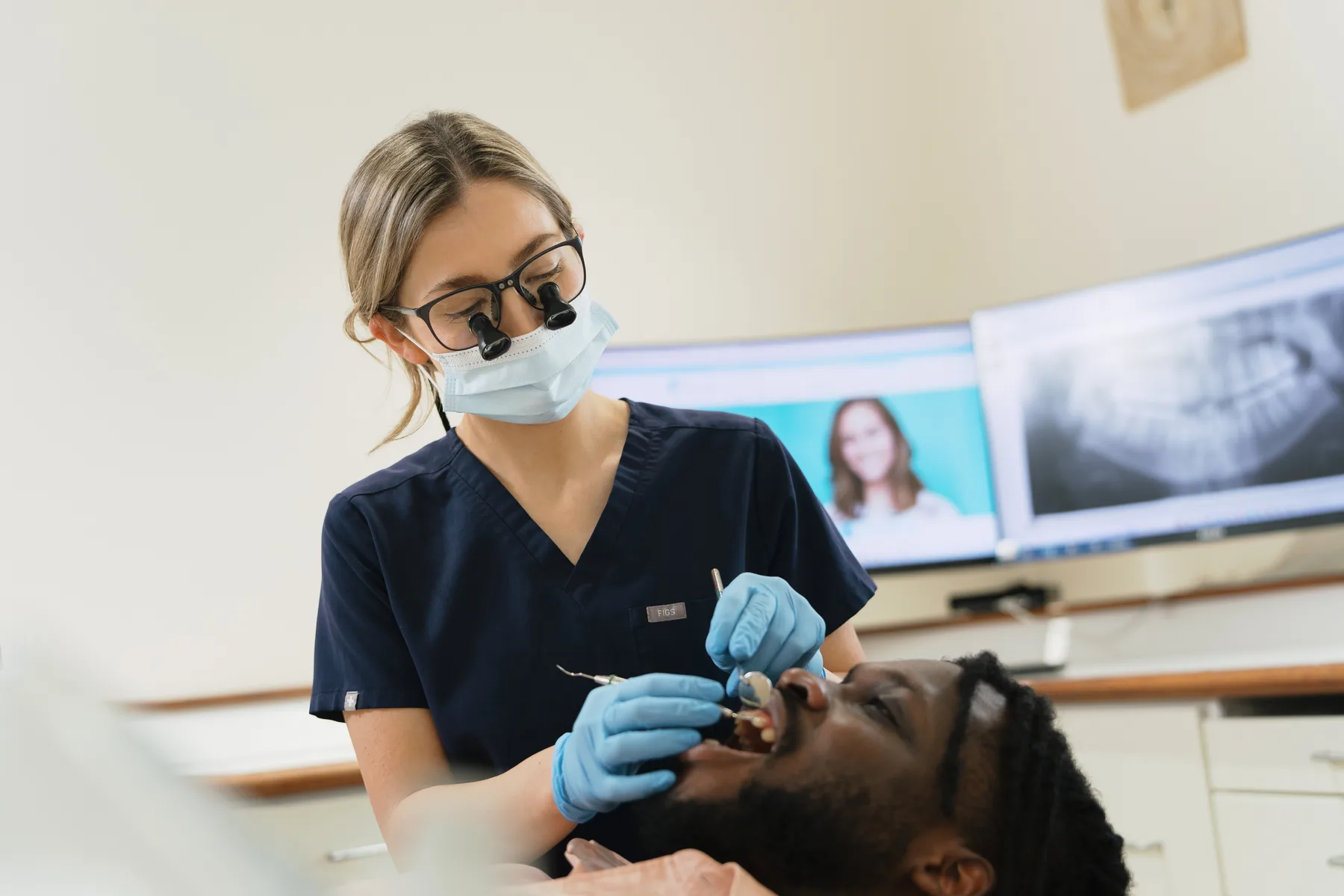
A dentist examining a patient at Absolute Dental

At A Glance.

Updated . It explains the topic in general and can’t diagnose you.

Biggest food factor
How often you have sugar, as well as how much (healthdirect, tooth decay).
WHO advice
Under 10% of daily energy from free sugars, with extra benefit under 5% (WHO sugars guideline, 2015).
Best-proven habit
Brushing twice a day with fluoride toothpaste (Walsh et al., 2019).
What we don’t do
Sell or prescribe supplements, or run detox programs.
Who else can help
Your GP or an accredited dietitian, for nutrition beyond your teeth.

Why does sugar cause tooth decay?

Sugar causes tooth decay because bacteria in dental plaque turn it into acid, and that acid softens enamel. Saliva then neutralises the acid and helps the surface recover, but that takes time. When sugar arrives often, through grazing, sweet drinks or lollies across the day, recovery can’t keep up and decay becomes more likely (healthdirect, tooth decay). Timing matters as much as the treat itself: a dessert with dinner is easier on teeth than the same amount nibbled through the afternoon.

In a systematic review written to inform WHO guidelines, lower intakes of free sugars went with less decay (Moynihan and Kelly, 2014). Free sugars are those added to food and drink, plus the sugars in honey, syrups and fruit juice.

What can I change without giving up treats?

Small, steady changes help more than a perfect diet you can’t keep up:

  • Have sweet food and drinks with meals instead of between them.
  • Make plain water your drink between meals.
  • Sour or fizzy drinks, including kombucha, sports drinks and juice, are acidic and can wear enamel. Have them with food and follow them with water.
  • Between meals, savoury snacks such as cheese, nuts or crunchy vegetables are kinder to teeth than biscuits or dried fruit.
  • Mention a dry mouth, especially one caused by medicines. Less saliva means less natural protection, and we can suggest ways to manage it.

How does a dry mouth affect teeth?

A dry mouth affects teeth because saliva is their natural defence. It washes food away, dilutes acid and helps enamel recover after eating. Many common medicines reduce saliva, and so can breathing through your mouth at night, some health conditions and not drinking enough water. With less saliva, teeth have less protection from acid. If your mouth often feels dry, tell your dentist and your GP, especially if a medicine might be the cause. Don’t stop a prescribed medicine on your own; your doctor can review it.

Which daily habits have the best evidence?

The daily habit with the best evidence is brushing twice a day with fluoride toothpaste, then spitting out instead of rinsing. Fluoride toothpaste prevents decay, according to a Cochrane review (Walsh et al., 2019), and Australia’s NHMRC endorses adding fluoride to community water supplies (NHMRC, 2017). Once a day, clean between your teeth too. On average, a powered toothbrush beats a manual one by a small margin for plaque and gum inflammation (Yaacob et al., 2014), but a soft manual brush used well still does the job.

Is food for teeth the same as food for health?

Food that’s good for your teeth overlaps a lot with food that’s good for the rest of you. Cutting back on free sugars, tobacco and alcohol helps your mouth and the rest of you, and the World Health Organization treats oral health as part of overall health (WHO oral health fact sheet). Smoking or vaping, diabetes, pregnancy and medicines that dry the mouth can each change what your prevention plan needs, and we’ll work with your doctor where that helps.

Supplements and detox programs aren’t part of our care, and dental care isn’t a treatment for conditions elsewhere in your body.

Everyday Swaps, Side By Side.

Each swap is compared on what it changes for your teeth. None of them needs a perfect diet.

Instead ofTryWhat it changes
Sipping a sweet drink over an hourHaving it with a meal, then waterFewer acid attacks across the day (healthdirect, tooth decay)
Grazing on biscuits between mealsCheese, nuts or vegetablesLess sugar sitting on your teeth
Juice or kombucha through the dayWater between mealsLess acid on your enamel

These are general swaps. Your dentist can suggest the ones that suit your mouth and your day.

What Food Can’t Do For Teeth.

Food matters, but it isn’t magic. Here’s where the evidence stops.

  • No diet repairs a cavity. Once decay has broken through the enamel, the tooth needs treatment.
  • Supplements don’t replace brushing or fluoride. If you think you’re low in a nutrient, your GP or a dietitian can check.
  • Honey, syrups and fruit juice count as free sugars too (WHO sugars guideline, 2015).

Services and articles connected to this guide.

  • Preventive Care

    Check-ups and cleans that include food, dry mouth and fluoride questions.

  • Understanding Your Daily Routine

    Brushing, cleaning between teeth and how often to come in.

  • What Is Plaque Or Calculus?

    Why plaque hardens, and why a clean removes what brushing can’t.

Frequently Asked Questions

The World Health Organization advises getting less than 10% of your daily energy from free sugars, and less than 5% for extra benefit. For an adult, 5% works out at roughly six teaspoons a day (WHO sugars guideline, 2015). How often you have sugar matters too, so keep sweet things to mealtimes.

Free sugars are those added to food and drink, plus the sugars in honey, syrups and fruit juice. In a systematic review written to inform the WHO guidelines, lower intakes of free sugars went with less decay (Moynihan and Kelly, 2014). Each time sugar arrives, bacteria in plaque make acid that softens enamel, and saliva needs time to repair it, so grazing and sipping give teeth little rest (healthdirect, tooth decay).

A dessert with dinner is easier on teeth than the same amount nibbled through the afternoon. Make plain water your drink between meals, and choose savoury snacks such as cheese, nuts or crunchy vegetables over biscuits or dried fruit. No diet repairs a cavity, and we don’t ask for a perfect diet. We look at your usual day and pick one or two changes you’ll keep.

Questions About This Topic?

Bring them to a visit. Call our West Perth team or request a time online, and tell us what you’d like to talk about.