
Menu
Absolute Dental

Biocompatible & Metal-Free Materials · Metal-free and biocompatible materials

Which Metal-Free Material Suits Your Tooth?

The metal-free material that suits your tooth depends on the size of the repair, where the tooth sits and how hard you bite. At Absolute Dental, small and medium fillings are usually composite resin, and larger repairs are often ceramic. You’ll hear what each is made of, and its trade-offs, before you choose.

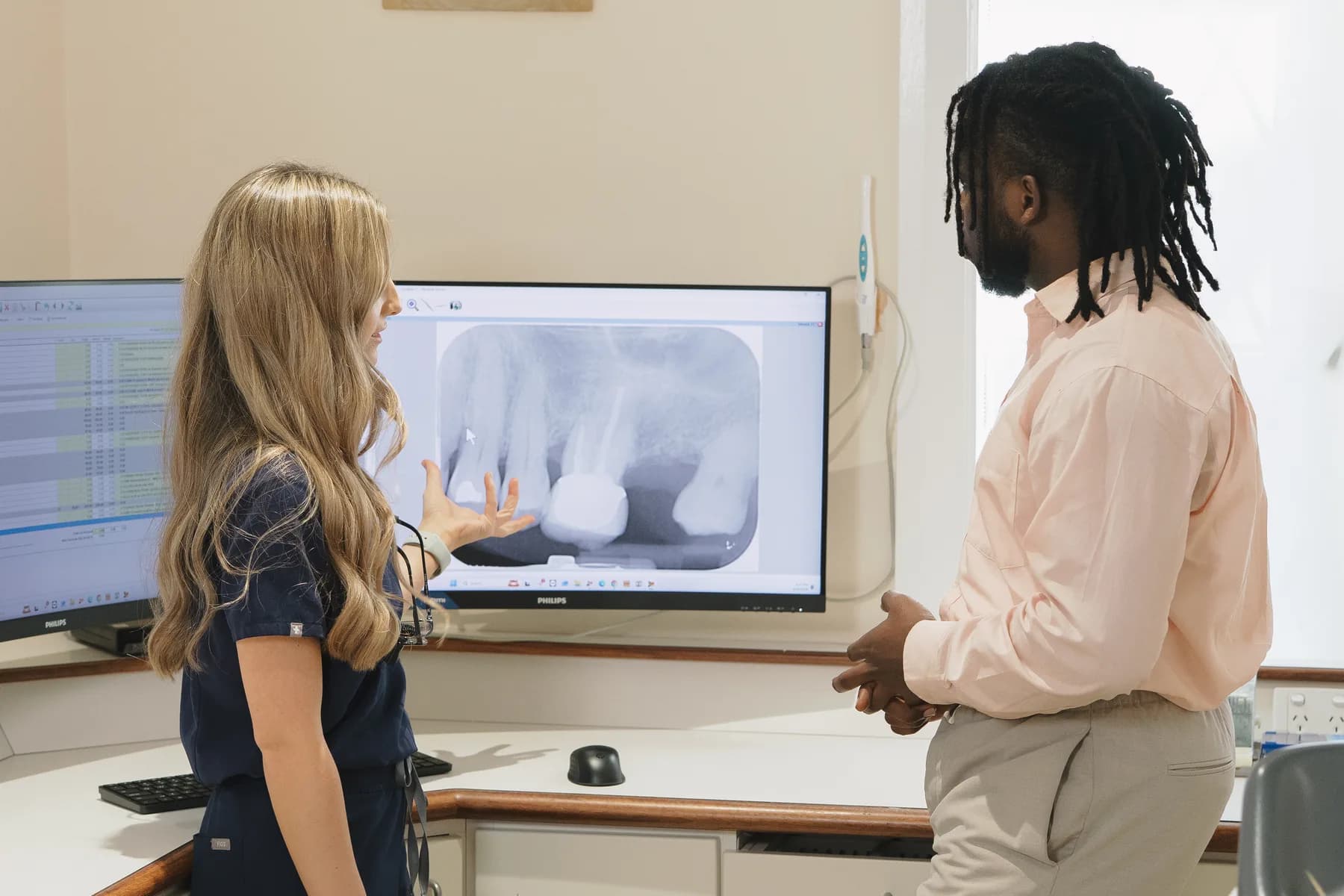
A dentist explaining an X-ray at Absolute Dental

At A Glance.

Updated . It explains the topic in general and can’t diagnose you.

Main options
Composite resin and ceramic (porcelain).
Same-day ceramic
Selected cases, made in one visit with CEREC.
Durability
Composite in back teeth fails sooner on average than amalgam (Worthington et al., 2021).
BPA
The ADA says long-term exposure from dental materials hasn’t been linked to harm (ADA Policy 6.27, 2025).
Allergy testing
Arranged by your doctor or an allergy specialist, not at the practice.

What does biocompatible mean in dentistry?

Biocompatible, in dentistry, describes a material that suits the body for the job it has to do. Every dental material supplied in Australia is regulated, so the word doesn’t mark a special grade. It describes a way of choosing: fitting the material to the tooth, your bite, any diagnosed allergy and what you’d prefer. If you’d rather avoid metal for any reason, say so. You don’t need a medical reason, and the options are explained either way.

How do composite and ceramic differ?

Composite resin and ceramic differ in how they’re made and placed. Composite is a tooth-coloured resin, shaped straight onto the tooth and set hard with a curing light in one visit. Ceramic, also called porcelain, is made as a separate piece, either in a dental laboratory or, for selected cases, in the practice with CEREC, then bonded in. Composite suits small and medium cavities and is easy to repair. Ceramic suits larger repairs; it lasts well and can be shaded to blend in (healthdirect, fillings).

Are metal-free materials always better?

Metal-free materials aren’t automatically better for every tooth. A 2021 Cochrane review found composite fillings in back teeth fail more often than amalgam (Worthington et al., 2021). The review rated that evidence as low certainty, and its trials used older composite materials, so newer composites may do better. Porcelain can chip. Bonding also needs a dry tooth and careful technique. A fair comparison covers appearance, strength, lifespan and cost, and your dentist will weigh them with you (ADA, teeth.org.au).

What if I have an allergy or sensitivity?

Mention a known allergy when you book, and bring your test results if you have them. Reactions to dental materials are rare, though they do occur, for instance to nickel or to an ingredient of amalgam. Allergy testing isn’t done at the practice; your doctor or an allergy specialist can organise it. Once we have the result, the plan steers around the material involved where that’s possible. A confirmed amalgam allergy is also one of the recognised reasons to replace an amalgam filling (ADA Policy 6.18, 2026).

Should old metal crowns or fillings be replaced?

Old metal crowns or fillings don’t need replacing just because they contain metal. A crown or filling that’s intact, comfortable and easy to clean usually protects more of your tooth if it stays, because every replacement removes some healthy tooth (ADA, teeth.org.au). Replacement makes sense when the work has failed, when you have a confirmed sensitivity, or when you choose it after hearing the trade-offs. For silver (amalgam) fillings, our separate guide explains how removal is done with extra precautions.

Composite And Ceramic, Compared.

Compared on the criteria that usually decide the choice. Your dentist will apply them to your tooth.

What we comparedComposite resinCeramic
Best suited toSmall and medium cavitiesLarger repairs, onlays and crowns
How it’s madeShaped on the tooth in one visitMade in a laboratory, or the same day with CEREC for selected cases
Tooth removedUsually littleMore for a crown, less for an inlay or onlay
LifespanShorter than amalgam in back teeth, on average (Worthington et al., 2021)Long-lasting (healthdirect, fillings)
RepairsEasy to add to or repairChips are harder to repair
AppearanceTooth-coloured, but can stain over timeTooth-coloured and stain-resistant

Cost depends on the tooth and the method. You’ll get a quote for each suitable option.

What The Evidence Doesn’t Show.

Materials attract strong claims. Here’s what the research doesn’t support.

  • No material is risk-free for everyone, white fillings included. Every option has trade-offs.
  • Replacing sound amalgam fillings hasn’t been shown to improve general health (ADA Policy 6.18, 2026).
  • Biocompatible isn’t a certification. It describes how a material is chosen, not a special product.

Services and articles connected to this guide.

  • MiCrown®

    Our five-stage plan for crowns and bridges, including metal-free ceramic.

  • Restorative Treatment

    Fillings, onlays and crowns, from the smallest repair up.

  • Dental Veneers

    Porcelain and composite veneers, compared with smaller changes.

Frequently Asked Questions

Often, but not in every case. Composite or ceramic suits most fillings and onlays, and many crowns. A very heavy bite, or some bridge designs, may need a different material, and we’ll explain why.

Composite resin is a tooth-coloured filling shaped on the tooth in one visit, and it suits small and medium cavities. Ceramic, also called porcelain, is made as a separate piece and suits larger repairs, onlays and crowns. It lasts well and can be shaded to blend in (healthdirect, fillings). Each has trade-offs in strength, wear, repair and cost (ADA, teeth.org.au), which we explain for each tooth.

Old metal crowns or fillings that are intact, comfortable and easy to clean don’t need replacing just because they contain metal. Every replacement removes some healthy tooth (ADA, teeth.org.au). If you’d rather avoid metal for any reason, tell us. You don’t need a medical reason. We’ll explain the suitable options for each tooth, what each is made of and what each costs.

Questions About This Topic?

Bring them to a visit. Call our West Perth team or request a time online, and tell us what you’d like to talk about.